Our inaugural State of Remote Work Report dives into hiring practices and work trends across US architecture firms for 2026.
This report, compiling internal data from 2025-2026, demonstrates the shifting landscape in hiring and remote work within architecture and the wider AEC industry, providing key insights for firms looking to plan their hiring and work policies for 2027.
The main areas of consideration for this report are:
- Remote work policies
- Projected industry growth
- Skilled labor shortage
- Rise of nearshoring
- Average salaries
Architecture & Remote Work
The report comes as other industry publications report a broad trend towards remote work and hiring.
In a recent AIA (The American Institute of Architects) survey, it was noted that most US architecture firms have adopted either a hybrid or remote-first approach, with principal architects stressing the importance of flexibility and adaptability moving forward.
In a recent Monograph study, it was estimated that 79% of firms have adopted a hybrid or remote-first work model.
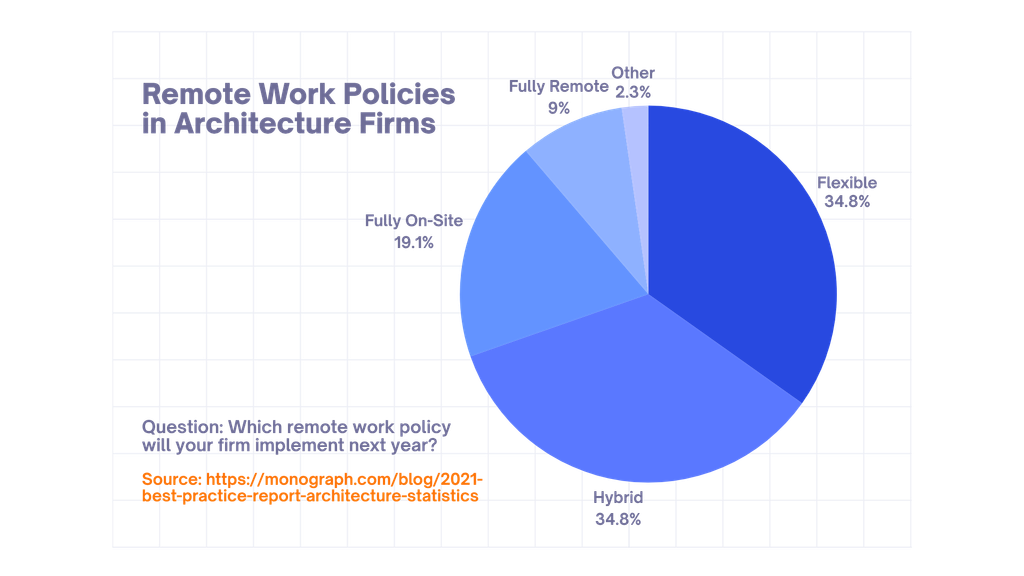
Another AIA survey confirms that over 70% of AEC professionals now seek remote flexibility, with many prioritizing it over other factors such as pay and additional benefits, resulting in many architecture firms adopting a hybrid or remote-first approach.

What we are seeing across our client base is a widespread adoption of remote work policies, resulting in a growing interest in nearshore hiring. Firms are finding that they don’t need to restructure around remote staffing, as they have already incorporated hybrid and remote workflows into their everyday practice.
Al Khan, Founder of HireArchitects
The firms waiting for the labor market to stabilize and remote work to disappear are going to be waiting forever. But the companies that are adapting now are able to take advantage of increased flexibility and cost savings.
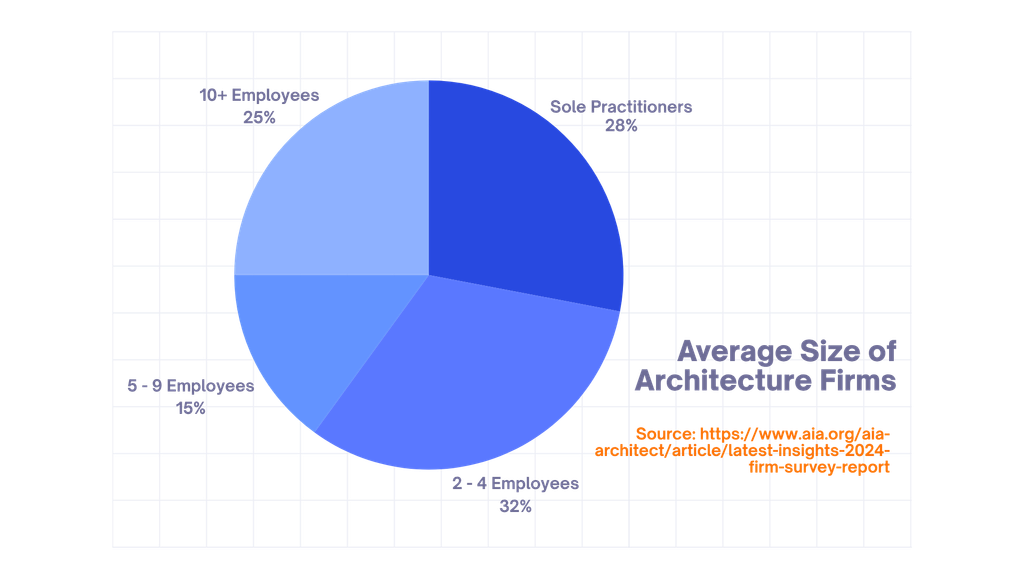
This is particularly significant as the vast majority (75%) of US architecture firms have fewer than 10 employees, with 60% having fewer than 5, suggesting that this trend is the result of smaller firms moving away from traditional office-based work modes (AIA Firm Survey Report 2024).
Industry Growth & Labor Shortage
Meanwhile, architecture is facing a significant skilled labor shortage.
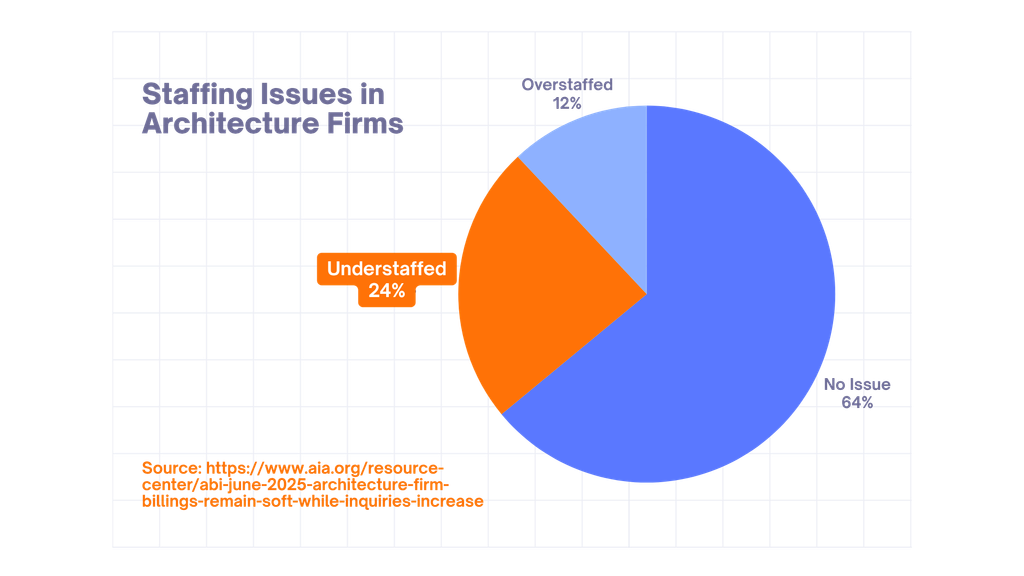
According to Deloitte’s 2026 Engineering and Construction Industry Outlook, labor shortages could cost the AEC sector up to $124 billion in lost output this year, while the AIA reports 24% of architecture firms were understaffed in 2025.
This is a huge shortfall. Firms can only counter it by looking offshore.
Al Khan, Founder of HireArchitects
At the same time, the US architecture market is projected to grow at a CAGR of 4.2% from 2024 to 2030, according to Grand View Research, with 4.8% employment growth projected between 2022 and 2032 (U.S. News & World Report).
Nearshoring & Remote Staffing
According to our 2025-26 internal data, the past year has seen a 35% rise in demand for remote architecture professionals, as more firms look to shift a portion of their staff offshore in order to take advantage of greater cost savings and increased flexibility.
The report identifies the most commonly outsourced roles for 2026 include CAD drafters, construction estimators and BIM modelers.
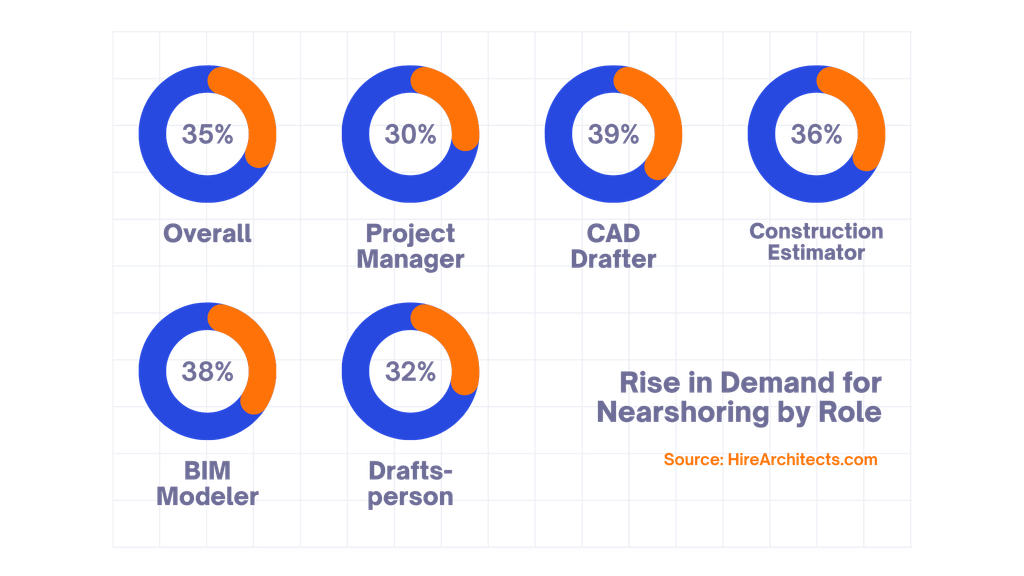
The data reflects the overall trend within the architecture industry towards remote work and nearshore hiring solutions.
Our data also indicates that the most popular countries for remote staffing are Mexico, Argentina and Colombia, with participants citing strong time zone overlap and cost savings.
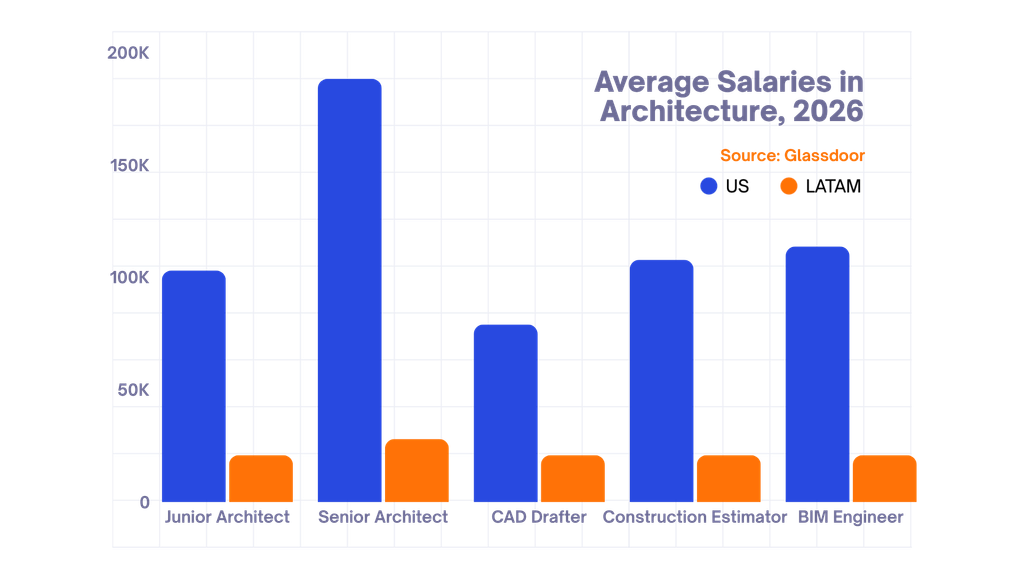
Full-time nearshore staffing through firms like HireArchitects starts at just $10/hour, or $20,800/year, 80% less than the average cost of hiring a junior architect locally – $102,930/year or $49/hour, according to Glassdoor.
Wondering how remote staffing could work for your firm?